
An estuary in motion
A different summer on the St. Lawrence
This summer, surveys carried out in the Saguenay—St. Lawrence Marine Park revealed fewer large rorquals than in previous years. However, this does not mean that whales have deserted the estuary. Instead, the river giants seem to have chosen other food sectors. As always, the St. Lawrence reminds us that it is a living, changing environment, and that no season is like another.
Valuable observations despite everything
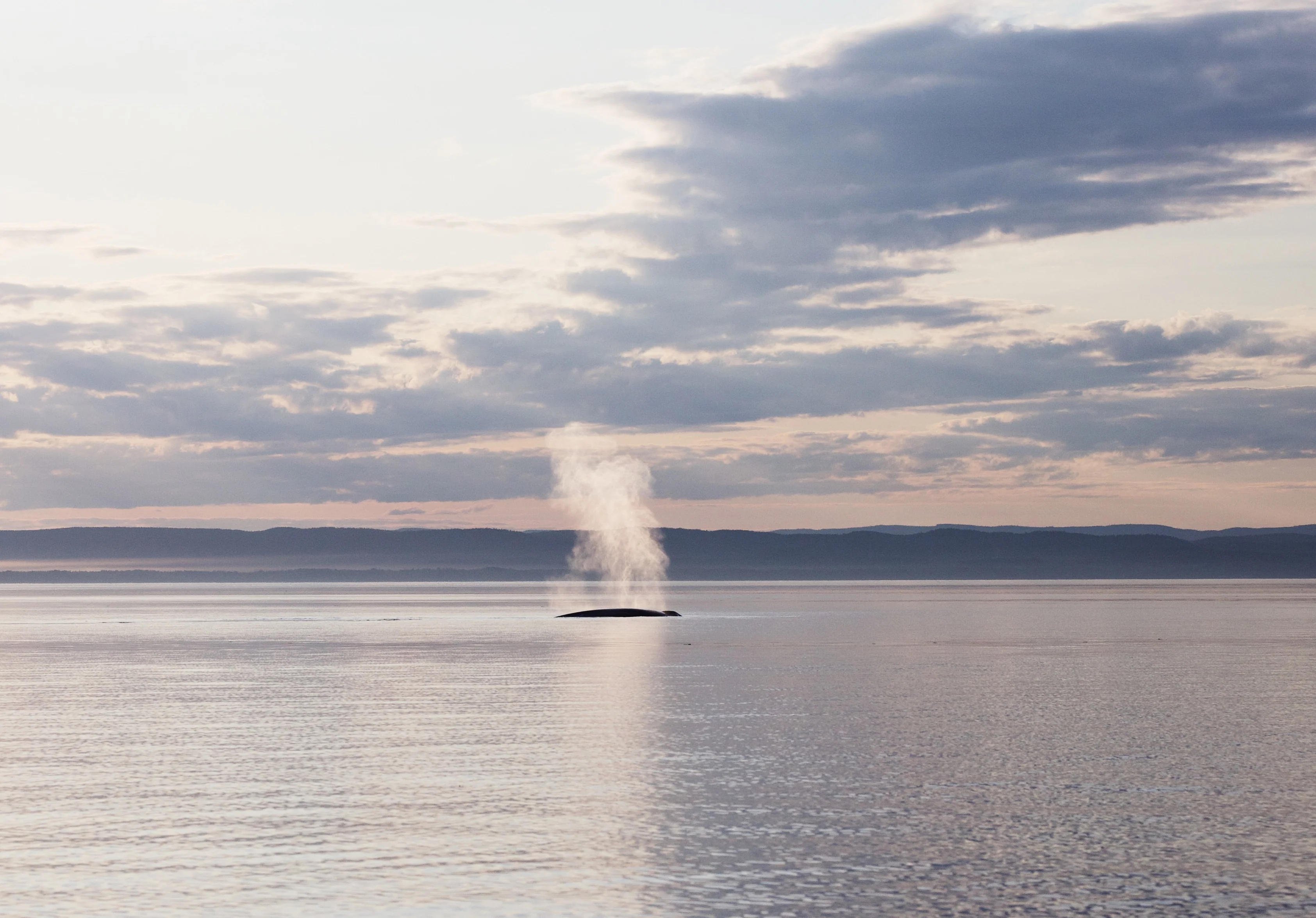
Between mid-June and mid-September, the team of GREMM Grand Rorquals Project recorded 6 humpbacks, 13 fin whales and 9 blue whales, in addition to a dozen individuals observed between March and June. These figures reflect a very real presence, even if it is more discreet than in past years.
This season, krill was abundant in the estuary, but small pelagic fish such as herring and capelin became rarer (Whales live). This contrast has a direct influence on the presence of whales. Humpbacks eat mostly these fish, while supplementing their diet with krill. Fin whales, on the other hand, seem to adapt more, by varying their diet according to what is available. As for blue whales, they remain faithful to their favorite prey: krill. As a result, some individuals choose other feeding areas when their favorite food is rarer.
A river that changes
These fluctuations are not unusual: some years, large rorquals gather in large numbers in the estuary; others, they are more discreet. This is precisely why long-term follow-ups are essential. They allow us to better understand these variations and to highlight the wider changes that cross our river.
A season to follow
The season is not over. In just a few weeks, a lot can still happen. It is not impossible for new visitors to appear before fall. One thing is certain: we will continue to observe, to share, and to remain attentive to everything that the river still has to offer us.